
Your 8am Rush Loses Patients. An AI Receptionist Stops the Drop
The 8am scramble costs you patients before the surgery doors even open. Here is what an AI receptionist for medical practices should handle on its own, and the clinical line it must never cross.

Buyer Psychology & AI Distribution Strategist
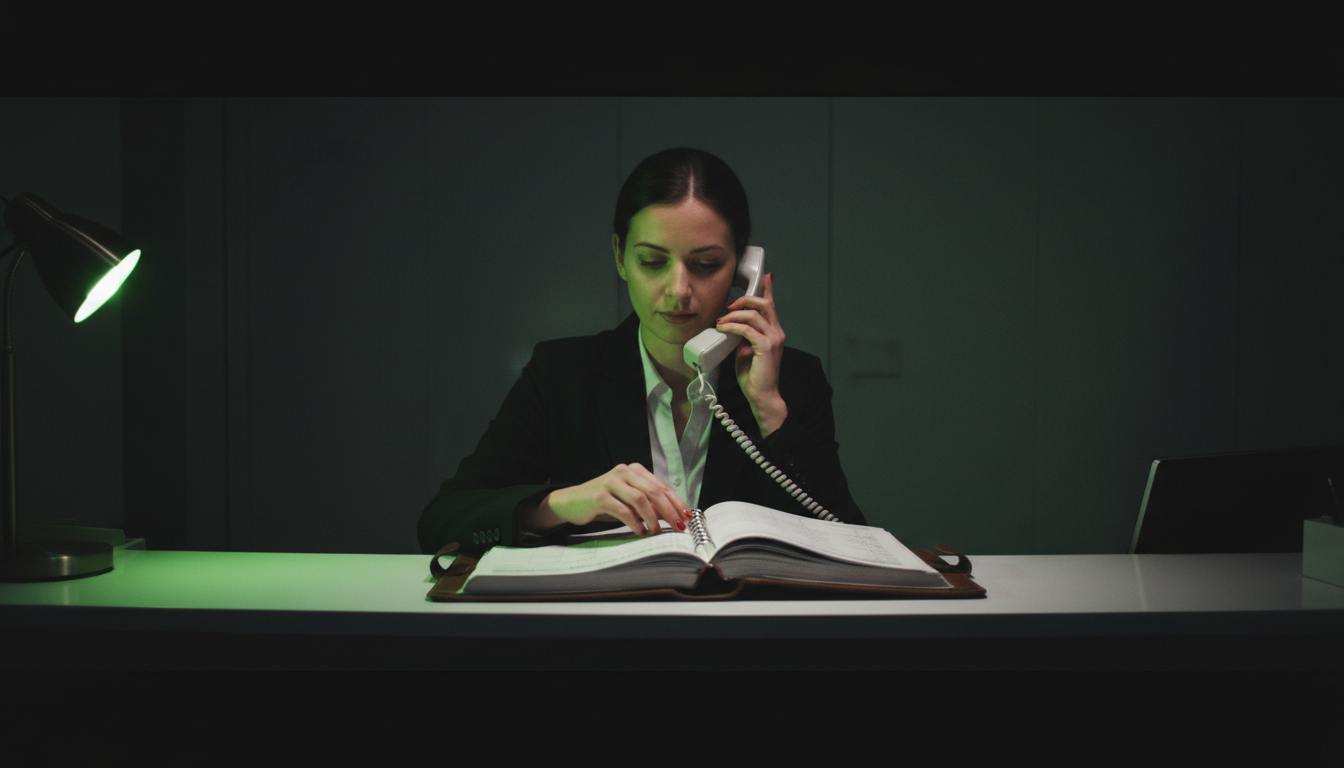
At 8am your phone lights up and stays lit. Every caller is trying to reach the same three people. Some hold. Some redial. Some give up and go to a walk-in centre, or worse, they wait and get sicker. None of that shows up in your books as a loss, but it is one: unbooked appointments, angry reviews, and a reception team burnt out by 9.30 five days a week.
The fix is not more phone lines. It is answering the routine stuff instantly and putting the rest in front of a human, fast.
What an AI receptionist for medical practices actually does
Strip away the vendor feature lists and the job is narrow on purpose. An AI receptionist reads and answers inbound contact (calls, texts, web forms, emails), replies in seconds in your practice's voice, and completes the next step where the step is administrative and reversible.
That means:
- Booking, moving and cancelling appointments against your live availability.
- Confirming appointment details and sending reminders before the slot.
- Answering opening hours, location, parking, car park codes, what to bring, how to register.
- Taking repeat prescription requests and passing them to the right queue.
- Capturing a callback request with the caller's details and reason, structured, so a human is not starting cold.
- Telling the patient what happens next and when, every single time.
That is the boring 70 to 80 per cent of a reception queue. It is also the part that is currently blocking the calls that genuinely need a person. This is the same pattern behind any well-built agentic AI system: the agent does not replace judgement, it clears the runway for it.
The line it must never cross: no triage, no clinical advice
Here is the part every competing page dodges. An AI receptionist must not triage symptoms and must not give clinical advice. Not "a bit", not "with a disclaimer". Not at all.
No assessing how urgent a chest pain is. No suggesting whether a rash can wait until Thursday. No interpreting a reading, a result or a medication query. No deciding who gets the on-the-day slot based on what the patient describes.
The reason is simple. Triage is a clinical act. It carries clinical liability and it belongs to trained clinicians working to your practice's protocols. A model that guesses well 95 per cent of the time is not a safety net, it is a hazard, because the 5 per cent is exactly the group you cannot afford to be wrong about.
So the boundary gets built in as a hard rule, not a hope. The moment a caller describes a symptom, the agent stops selling, stops solving, and does one thing: it captures what was said verbatim, flags it, and routes it to a human straight away. If the contact carries any urgency signal, it says plainly that the patient should ring 999 or contact NHS 111, and it escalates.
A good agent knows the shape of its own competence. Where the request is administrative, it acts. Where it is clinical, it hands over. That is bounded autonomy, and it is the whole design.
Built for a UK practice, not a US one
Most of what you will read on this topic is written for American clinics. It talks about HIPAA, insurance verification, dollar-per-hour wages and copays. Useful to them. Irrelevant to you.
A UK practice has a different set of realities:
- GDPR and the Data Protection Act, not HIPAA. Patient contact data is special category data. That drives real decisions: where data is processed and stored, how long it is kept, what your lawful basis is, and what goes in your record of processing. The ICO's guidance on AI and data protection is the starting point, and your DPO should see the design before it goes live, not after.
- No insurance verification step. For NHS work the entire American front-desk payment dance simply does not exist. For private practice you have a much simpler payment and confirmation flow.
- NHS systems and information governance. Anything that touches the clinical record is a different conversation with a different bar. Which is precisely why the first sensible deployment sits in front of the record, not inside it: answering, booking, reminding, routing.
- The 8am model itself. The queue-at-open pattern is a UK general practice problem. NHS England has pushed practices toward cloud telephony and better online access for exactly this reason. An AI receptionist is the layer that makes those channels actually responsive instead of just available.
If you want to see the mechanics in a lower-stakes setting first, the appointment logic is close to what runs on our salon front desk: live diary, instant reply, confirmation, reminder, no-show recovery. Same engine, far softer boundary.
Draft-and-approve: how you keep control
You do not hand a new receptionist the keys on day one, and you should not hand them to an agent either.
Start the agent in draft mode. It reads every inbound message and writes the reply it would have sent. Your team approves, edits or bins it. You watch the drafts for a fortnight. You learn very quickly where it is sharp and where it is soft, on your real traffic, with zero risk to a patient.
Then you release autonomy one category at a time. Reminders first, because they are one-way and low stakes. Then FAQs. Then booking within set rules. Anything with a symptom in it, or anything the agent is not confident about, stays in the human queue permanently. You set the thresholds. You can pull any category back the same afternoon.
Every action stays logged. Who asked, what the agent did, what it escalated, how long it took. That log is not just for governance, though it helps there. It is how you find out what your patients actually ring about, which is usually not what you assumed.
What you get back
The honest version: this does not remove your reception team, and if a vendor tells you it does, walk. Reception is not just a phone queue. It is the person who recognises a regular, reads a face in the waiting room and knows which caller is quietly frightened.
What it removes is the volume sitting on top of that. The forty identical calls about opening hours. The reschedules. The reminder ringrounds nobody has time for. Your team stops triaging a queue and starts handling the contacts that need a human being. Patients stop being punished for ringing at 8.03. Nobody gives up on hold.
That is the trade. Boring work to the agent. Judgement, care and clinical decisions to your people, with more room to do them properly.
Put The Front Desk on your practice's inbound for free and watch it work in draft mode before it sends a single reply on its own. You will see exactly what it would have answered, exactly what it would have escalated, and exactly where the boundary holds. Take the free test drive and read the drafts yourself.
Tags
FREE SOLOPRENEUR PLAYBOOKS
Escape the 'Build & Pray' trap today.
Get the free 0-Dollar Distribution Checklist and the Eugene Schwartz ICP Discovery Matrix Google Sheets. 100% free, zero friction.
Explore Free Playbooks & Templates →