
Your Digital Product Isn't Slow. It's Too Big.
Everyone answers this like it's a question about how fast you type. It isn't. The timeline for your product was set before you wrote a word, and here's the part nobody tells you about fixing it.

Buyer Psychology & AI Distribution Strategist
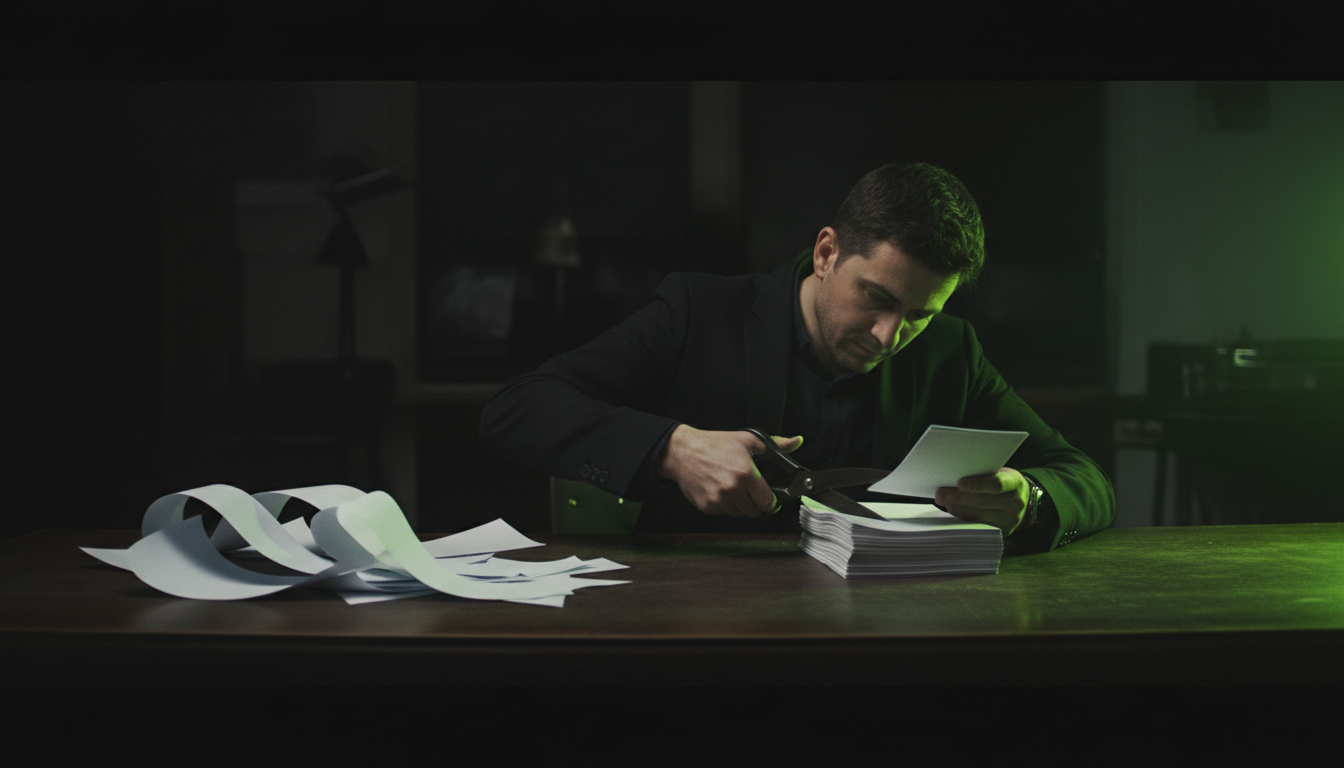
Most people asking this question have already been building for three weeks. That's the tell. It sounds like a planning question and it isn't. It's a question about permission: is it normal that I'm still not finished, and is something wrong with me?
I'll give you a real answer, just not the one you came for. The number you're chasing was decided before you opened a single document. It got set the moment you chose what the thing would be. Nothing you do at the keyboard now will move it much.
Why every answer you've read so far is useless
Go looking and you get three flavours of nonsense.
You get the anecdote crowd. On Reddit creators will tell you the first ebook took a few days and it speeds up once you have templates. True, and completely unhelpful, because their few days and your few days are not the same days.
You get the agency quotes. Four to six weeks standard, eight to ten for full custom. Those numbers come from selling design services to clients, where half the time is waiting on approvals from someone else. You are not waiting on anyone. You are the client.
Then you get the speed promise. Sell your first product in three days. That one is a hook wearing a timeline. It's not lying exactly, it's just quietly picking the smallest possible product and not telling you that's the trick.
All three answer as if you asked about typing speed. You didn't.
The clock started before you wrote a word
Here is the thing I got wrong for years, and it cost me a genuinely embarrassing number of half-finished folders on my laptop.
I thought building was the slow part. So I went and got faster at building. I got much faster. I can now put a clean, well-structured guide together in a fraction of the time it used to take me, because AI took the grunt work off the table: the outlining, the first draft, the cover, the tidy-up. That part is solved.
And my projects still took months.
Because the making was never the bottleneck. The deciding was. Every time I sat down to "work on the product", I was actually still deciding what the product was. Adding a module. Widening the audience because narrow felt risky. Realising chapter four needed its own chapter. That's not slow work. That's a scope that keeps moving, and you cannot outrun a moving finish line.
So when someone asks me how long a digital product takes, my honest answer is: tell me what you promised, and I'll tell you how long it takes. The promise sets the clock. That's the whole mechanism, and it's the bit the free 5-step Practical Income Method is built around.
What a promise actually costs in time
Watch what happens to the same idea at different sizes.
"A complete guide to using AI in your business." That is not a product, it's a category. Who is it for? Every business. What problem does it solve? All of them. You will never finish it, and not because you're lazy. There is no finish line in that sentence.
"A guide to AI for small e-commerce owners." Better. Still a book-sized promise. Still weeks, and still vague enough that you'll keep adding to it.
"A 12-page guide showing an online shop owner how to write their product descriptions with AI, with the exact prompts." That's a weekend. Maybe an evening. Not because you type faster, but because you can see the edge of it. You know when you're done, because the promise told you.
Same skill. Same tools. Same person. Three completely different timelines, and the only thing that changed was the size of the promise.
This is why the scope question is not a small planning detail. It's the entire timeline, disguised as a creative decision.
The four questions that shrink it
When something of mine is dragging, I stop building and run these. It takes fifteen minutes and it has saved me months.
One: name one person, not one audience. Not "freelancers". One freelancer. A photographer who takes decent pictures and writes terrible captions. If you can't picture them, your product will keep growing to cover everyone you can't picture.
Two: name one problem they already feel. Something they'd complain about out loud, unprompted, on a Tuesday. Not something you think they should care about. If you have to explain why the problem matters, you've picked the wrong one and you'll spend half the product doing the explaining.
Three: name the one thing that changes after they use it. One specific after-state. "They have thirty captions written in their voice." If your answer has an "and" in it, you've got two products. Cut one.
Four: name what you're leaving out. This is the one people skip, and it's the one that does the work. Write down three things you could include and won't. Those three things are the weeks you're getting back. AI will happily help you build all of it, and fast, which is exactly why the deciding matters more now than it ever did.
Do that and the timeline collapses on its own. Not because you sped up. Because you stopped asking yourself to do a month of work.
The bit nobody wants to hear
There's a reason big scope is so seductive, and it's not ambition.
While it's unfinished, it can't be judged. Nobody can look at it and not buy it. You get to keep the good feeling of building something without ever finding out whether anyone wanted it. "It's not ready yet" is a very comfortable place to live, and I lived there for a long time.
But an unfinished product teaches you absolutely nothing. Zero information. A small finished one teaches you everything: whether the problem was real, whether the people exist, whether the words you used to describe it made anyone lean in. That feedback is worth more than the extra forty pages, and you cannot get it while the thing is still on your laptop.
So the fastest route to a good product isn't a faster build. It's a smaller first one that comes back with information.
Which means the honest answer to how long this takes is: as long as you let the promise be. A tight, specific first product is a weekend of real work, and I'd rather you spent your first month shipping three small things and learning what landed than spending it on one big thing that never leaves the folder.
You're not behind. You just made the promise too big, and that's a fifteen-minute fix, not a character flaw.
If you want the full version of this, I've put the whole thing into a free 5-step guide: how to find a problem people already feel, work out exactly who has it, build the product with AI without it ballooning, and get the right people coming to you for it. No cost, nothing to sit through. Get the Practical Income Method here.
Tags
FREE SOLOPRENEUR PLAYBOOKS
Escape the 'Build & Pray' trap today.
Get the free 0-Dollar Distribution Checklist and the Eugene Schwartz ICP Discovery Matrix Google Sheets. 100% free, zero friction.
Explore Free Playbooks & Templates →